White Expandable Desktop Book Organizer with Accordion-Style Side Links & Upright Dividers for Books, Notebooks and Study Essentials
White Expandable Desktop Book Organizer with Accordion-Style Side Links & Upright Dividers for Books, Notebooks and Study Essentials
Couldn't load pickup availability

White Expandable Desktop Book Organizer with Accordion-Style Side Links & Upright Dividers for Books, Notebooks and Study Essentials
📚 Your Everyday Reading Deserves More Than Another Stack.
There are books you keep for years and books you reach for three times before lunch. A notebook for current ideas, a reference title for the work in front of you, a journal you want to remember to open. When they all become one horizontal pile, the piece you need is often somewhere underneath.
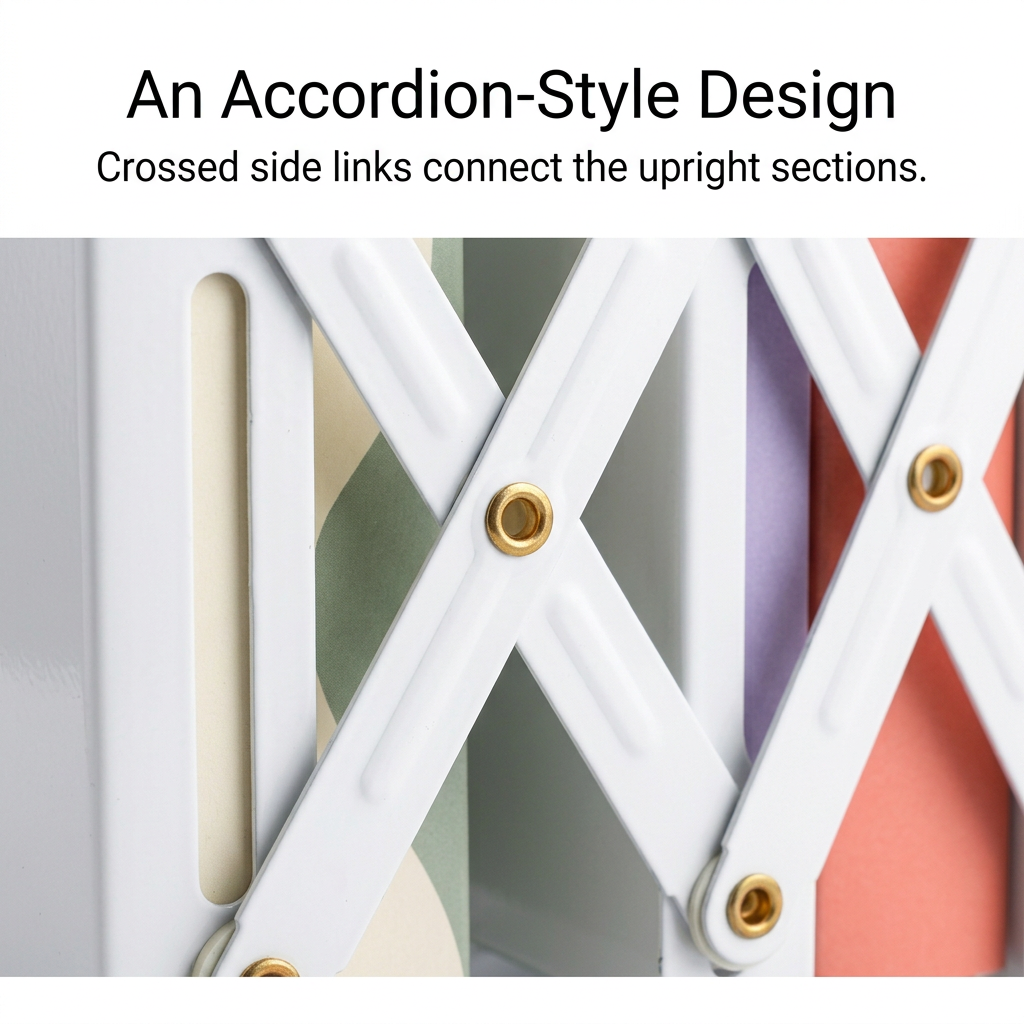
This white expandable desktop book organizer gives a selected collection a more deliberate arrangement. Upright sections divide the space, while crossed side links form an accordion-style structure along the outside. The pale finish keeps the frame visually light; small gold-tone pivot details add a warmer accent at the joints.
It is a desktop home for the reading and notes that belong in your current routine, rather than a promise to fit an entire library into a small corner.
🪗 The Structure Tells the Story.
Crossed links along the side
The visible X-shaped links connect successive upright sections. Their repeated pattern is the distinctive feature of the design, giving the organizer an accordion-like profile rather than the outline of a fixed storage box. Round gold-tone pivot points mark the connections between the white links.
The merchant identifies this as an expandable organizer. The exact adjustment range and approved operating positions still need to be checked against the actual product specifications. Do not infer a minimum or maximum width from a staged photograph.
Upright plates that define the collection
The white end and divider plates create separate positions for appropriately sized books and notebooks. Their shaped upper profiles add interest without obscuring the covers completely. Seen together, the plates make the arrangement read as a series of sections instead of one uninterrupted row.
How many books belong in each section depends on thickness, dimensions and the manufacturer's loading guidance. The styled images are not a verified capacity chart.
Base sections beneath the books
The reference shows flat white base sections beneath the uprights. These form part of the structure and should sit on a suitable flat surface. Keep the organizer fully supported rather than positioning a section over the edge of a desk or shelf.
The image does not establish a particular metal grade, coating, anti-slip backing or tested load rating. The white appearance and visible pivots describe the design, not a guarantee of a specific material construction.
📑 Build a Working Collection, Not a Permanent Pile.
A useful desktop selection begins with the books you actually reach for. Give current reading a section, keep the notebook for active ideas nearby, and separate reference material from items you only consult occasionally. That simple distinction can make the arrangement easier to understand than sorting solely by cover size.
- Current: the book, workbook or journal that belongs to the task you are doing now.
- Reference: the material you return to while working, chosen to fit the actual organizer.
- Next: a small selection waiting for attention, rather than every unread title in the room.
These are suggested categories, not fixed labels built into the product. The appeal of the upright sections is that you can organize around your own projects rather than a prescribed filing system.
🔄 A Collection That Changes With the Week.
At the start of a week, your notebook and planning materials might matter most. Later, a project reference or a book you are studying may take their place. The organizer gives those changes a visible setting instead of letting each new item create another temporary stack.
Adjust the arrangement according to the product's actual instructions. Remove the contents before changing the width unless the manufacturer expressly permits another method. Keep fingers away from crossed links and moving joints, and never force the frame beyond its approved travel.
Expandable does not mean unlimited. Books should sit appropriately within the base and upright sections without placing excessive outward force on the assembly. Confirm the approved use and load before choosing heavy or oversized volumes.
🖍️ Let the Covers Supply the Color.
The white structure makes a neutral backdrop for a more colorful desk. Peach, lavender, mint and powder-blue covers create a soft sequence behind the crossed links. The gold-tone pivot details introduce a small warm note without asking the entire workspace to follow a metallic theme.
A fresh study corner: combine a cream desk with a sage wall and a lavender stationery cup. Keep the books within a small family of colors if you enjoy a calmer arrangement, or let a few brighter spines become the accents.
A creative workspace: use a coral notebook beside a powder-blue backdrop and a butter-yellow task lamp. The white organizer connects the different colors without becoming another bold block on the desktop.
A quieter professional desk: pair it with neutral notebooks, charcoal equipment and warm wood. The X-pattern and small pivot points provide enough detail for the product to remain visually interesting even in a restrained palette.
There is no need to replace useful books simply because their covers do not match. The frame supplies the consistent outline; the collection can remain personal.
🪟 Three Places It Could Belong.
Beside the laptop: keep a suitable selection of current project references in view, while leaving enough room for the keyboard, mouse and any opening drawers.
On a study desk: give a notebook and the material for the current subject their own area. Measure the complete arrangement rather than assuming a workbook will fit because a smaller book appears in a photograph.
In a reading corner: display a selected group of titles you are actively enjoying. The organizer is for appropriately sized items within its confirmed limits, not a wall-mounted shelf or a storage tower.
In each setting, choose a stable, flat surface with enough depth for the base and the books. Avoid placing the organizer where frequent movement, overhanging contents or access to a narrow edge will make the arrangement impractical.
🗝️ A Small Reading Ritual, From Start to Finish.
You sit down with an idea to work through. Instead of lifting several books to find the right notebook, you take it from its familiar section. The remaining collection stays in view, making it easier to remember which title belongs to which task.
Later, the notebook returns, a reference book comes forward, and the open space in front of you becomes available again. At the end of the session, put back the pieces you still need and move finished material elsewhere.
The organizer cannot choose the priorities for you. What it can offer is a recognizable structure for the priorities you have already chosen: a few upright sections, a clear place to return things, and a collection that does not have to become another pile.
🧮 Measure the Real Items Before Choosing the Layout.
Organizer dimensions: confirm overall height, depth and the approved minimum and maximum widths. The small labels in the supplied reference are not clear enough to support reliable measurements in this listing.
Book dimensions: compare height, depth and thickness with the usable sections. Large folders, oversized workbooks and unusually heavy books may have different requirements from ordinary notebooks.
Desk clearance: allow space for the full footprint, the items themselves and ordinary access. A row that fits tightly between other objects may be difficult to use day to day.
Construction and limits: check actual material, assembly requirements, loading guidance and any surface recommendations. Visible rivets and white plates alone do not establish durability, corrosion resistance or anti-slip performance.
💬 Before It Joins Your Workspace.
Are the books included?
No. The listing is for the expandable organizer. Books, notebooks, stationery and room accessories in styled photography illustrate possible arrangements.
Can I choose any expansion width?
Use only positions and travel limits approved for the supplied product. No numerical range is claimed here without confirmed specifications.
Is it suitable for children to play with?
It is presented as a book organizer, not a toy. The crossed moving links and pivot points need appropriate handling, and fingers should be kept clear during adjustment.
Will the supplied packaging match the pictured carton?
The plain unbranded kraft box is a visual concept. Confirm actual packaging with the supplier before treating the illustrated carton as a shipment promise.
🌷 Give Your Next Chapter a Defined Place.
A more organized reading area does not have to start with a larger shelf. It can begin with a selected collection, a suitable place on the desk and a clear distinction between the books you use now and the ones that belong elsewhere.
With its white upright sections, accordion-style links and gold-tone pivot details, this expandable organizer brings a graphic structure to that everyday habit. Confirm the fit and operating limits, then arrange the collection around the way you read, study and work.